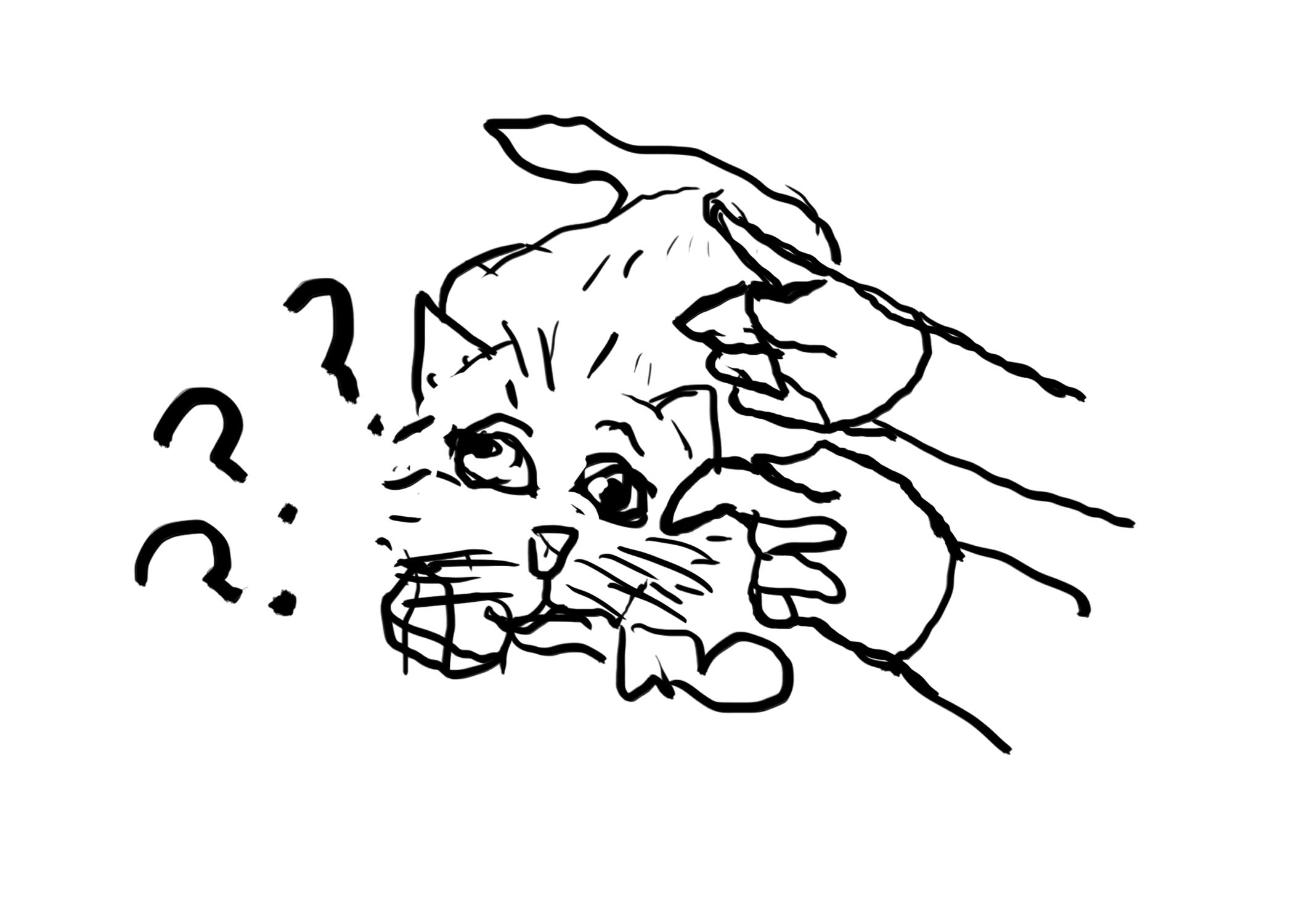
Traumas are when you feel a disconnected emotion (fear, anger, annoyance) for no apparent reason. With no apparent thought, the emotion wells up within you. Traumas needs to be explored and accepted. Traumatic experiences are characterized by the feeling of loss of control, that you cannot prevent something from happening or change the situation to something you want.
The prompts used to understand the traumatic incident(s) are:
If you are angry – what is that they are saying about you that you are afraid might be true? Look to experiences that prove that they are correct or your fear might be real.
If you are afraid – what are you afraid that might come true? Look to experiences that prove that your fear is founded.
Look for a time in the past related to something you are currently angry or emotional about in which you felt completely out of control.
Think of a time that you were trying really hard but couldn’t control the situation?
Try to enact the actual fear if you can. Fail on purpose if it is physically safe to do so.
Limiting Beliefs #1
Limiting belief #1 deals with unconscious beliefs that we hold. We may even consciously disagree with the belief, but unconsciously still act because of it. Limiting beliefs #1 manifests as unexplainable health issues (my back hurts for no apparent reason, my stomach clenches for no good reason).
The prompts used to deal with Limiting Belief #1 are:
How can the health problem (clench stomach) be helping me in some way? Why is my body helping me by doing this? The reason will often be the limiting belief itself.
Limiting Beliefs #2
Limiting beliefs #2 deals with conscious beliefs. They are manifested by self-talk that leads to stress. It’s not like Trauma in the sense that overthinking brings anxiety, anxiety is not an immediate, violent, and seemingly unexplainable reaction to an event which would be trauma.
The prompts used to deal with limiting beliefs #2 are:
When did I start believing that there was a “good” way or a “bad” way to do this? When did I decide a certain outcome was “good” and another was “bad”.
What do I judge other people for?
Final Note
All issues are the result of holding onto and fixating on something. We fixate on trauma in order to try to deal with a situation in which we had no control. We fixate on Limiting Beliefs #1 unconsciously and it causes our body to help us achieve our goals in a sense (if you feel like sleeping on the job is bad, your kidneys might hurt from your body’s effort to keep you awake despite the fatigue). We fixate on the “good” and “bad” outcome in limiting beliefs #2 we think ourselves into circles and become stressed.
Youwill be learning in this lesson how to play Over the Rainbowon the ukulele.
Here is what it will sound like:
Ready? Let’s get started!
Let’s first get you acquainted with the ukulele.
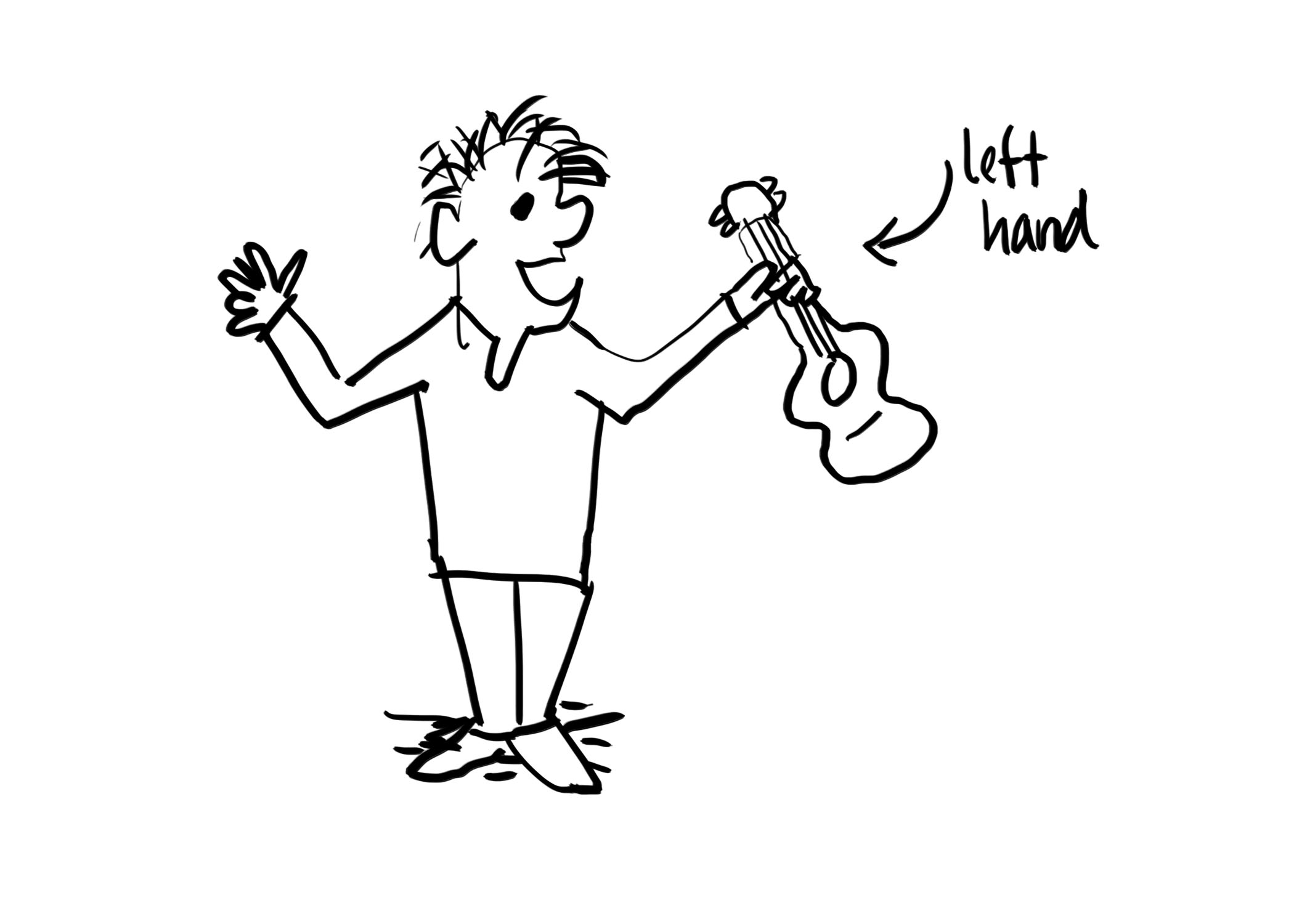
You are going to start off holding the ukulele in your left hand, with the neck of the ukulele in the palm of your hand and your fingers poised over the strings. You will be using your left hand to hold down certain strings when you are playing to make different notes and sets of notes, called chords.
Understanding the Ukulele
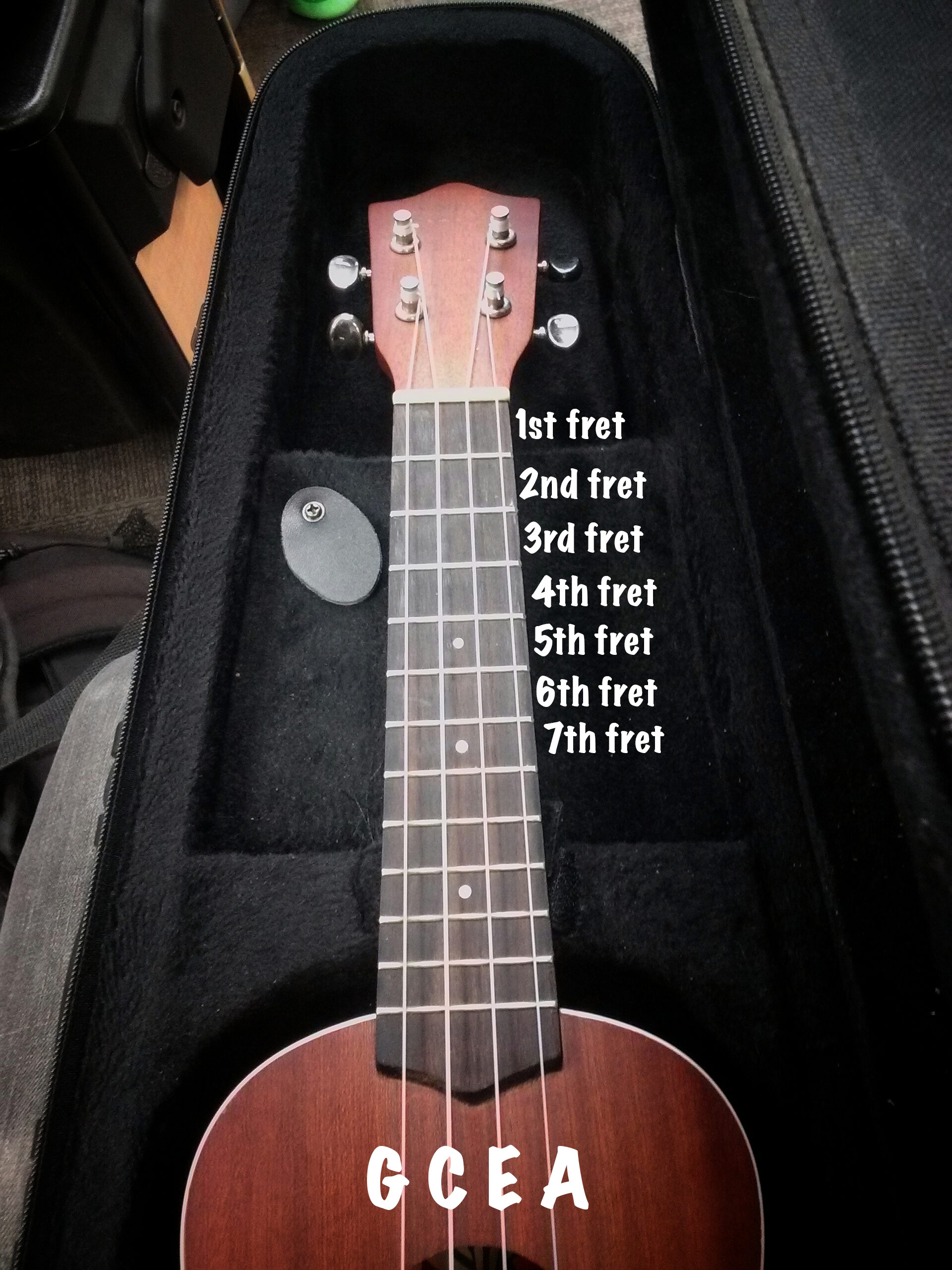
Look at the ukulele, it has four strings, and a wooden neck. On the wooden neck there are metal bar embedded into the wood. The metal bars divide the wooden neck (which is called a fretboard) into frets. the first section is called the first fret, the second section is called the second fret…etc.
Each string has a different letter, based on what note it play when you pluck it. The leftmost string is the G string, the next string is the C string, the string after that, the E string and the far right string is the A string.
Playing Chords
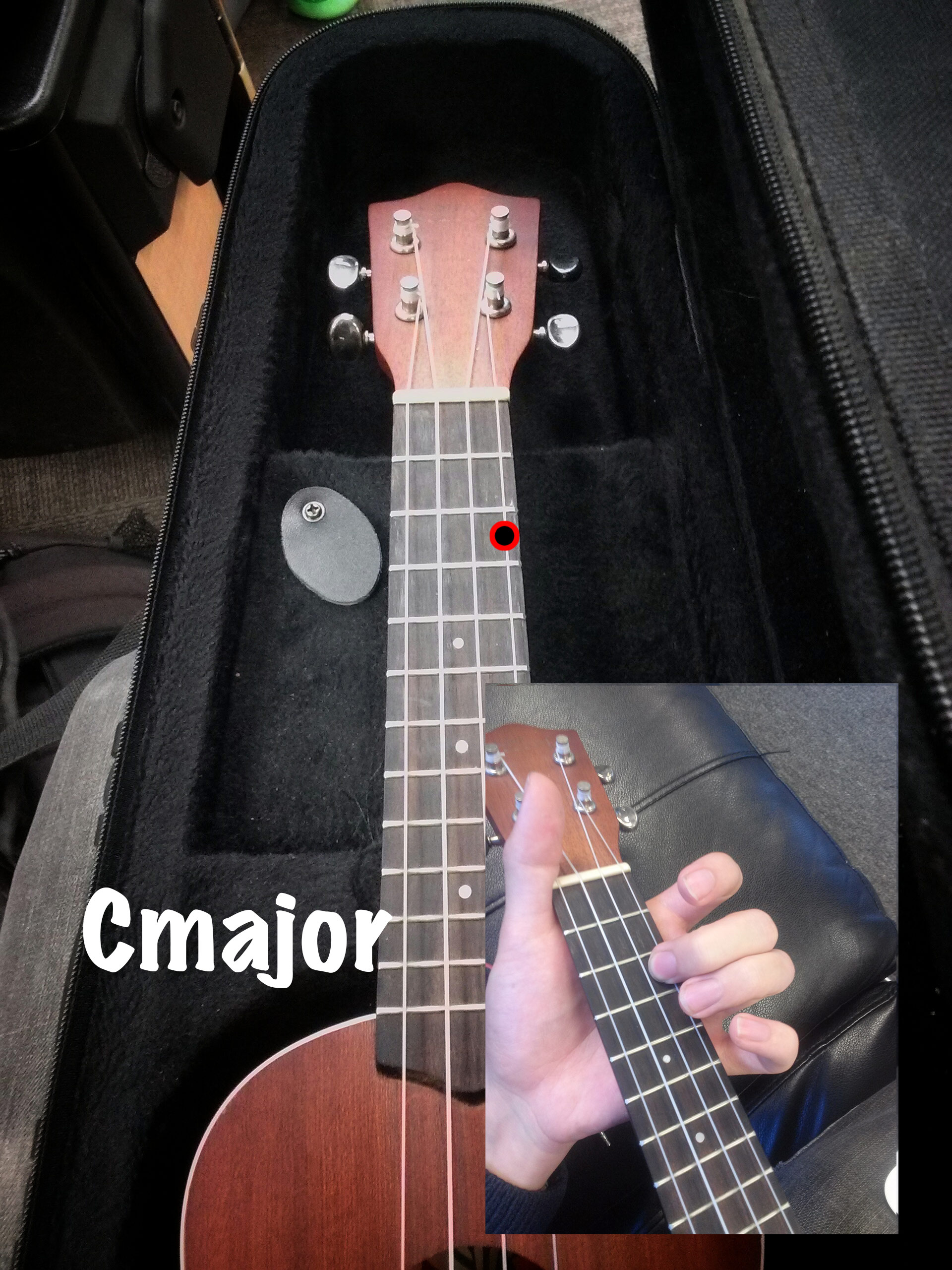
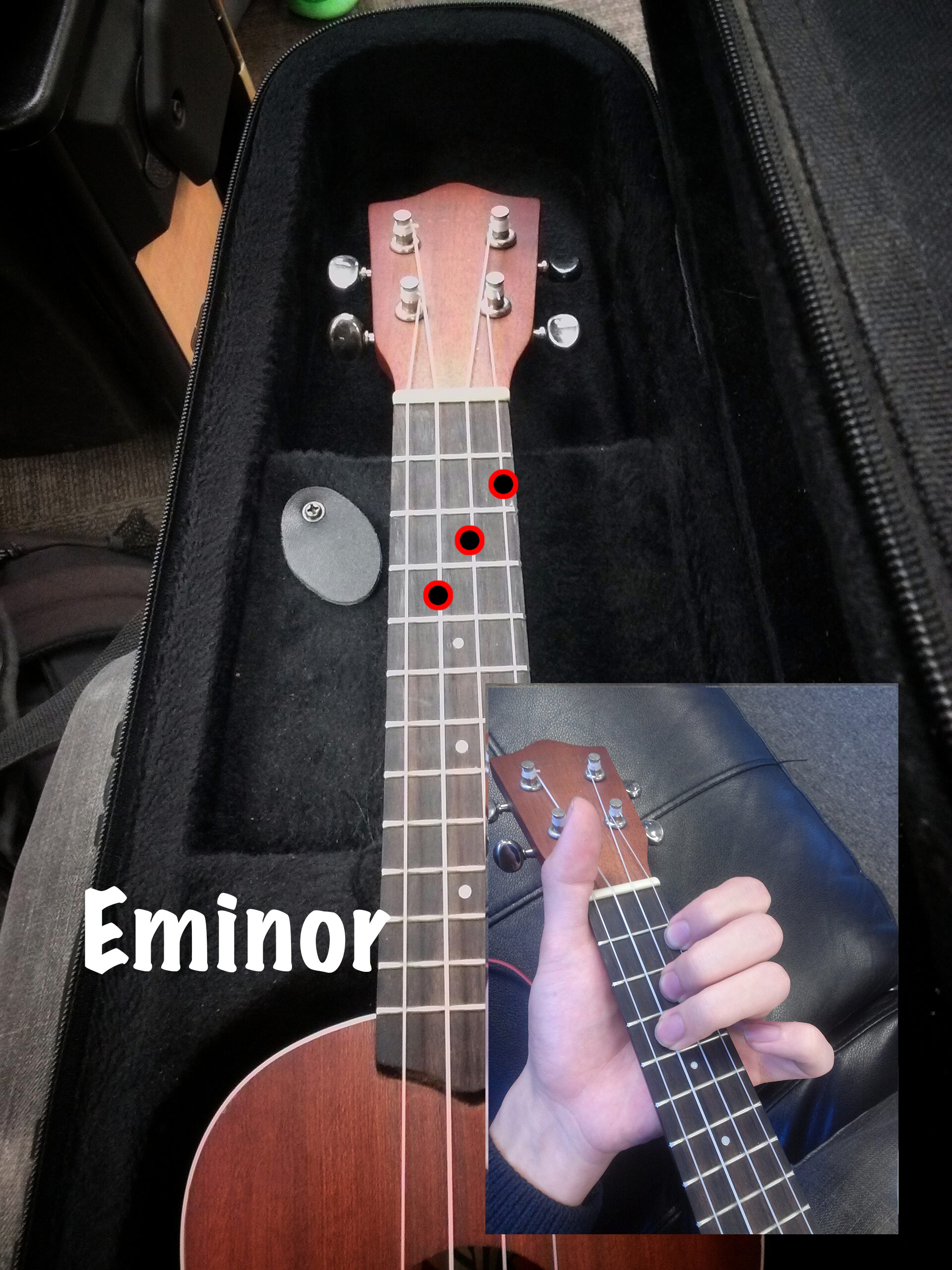
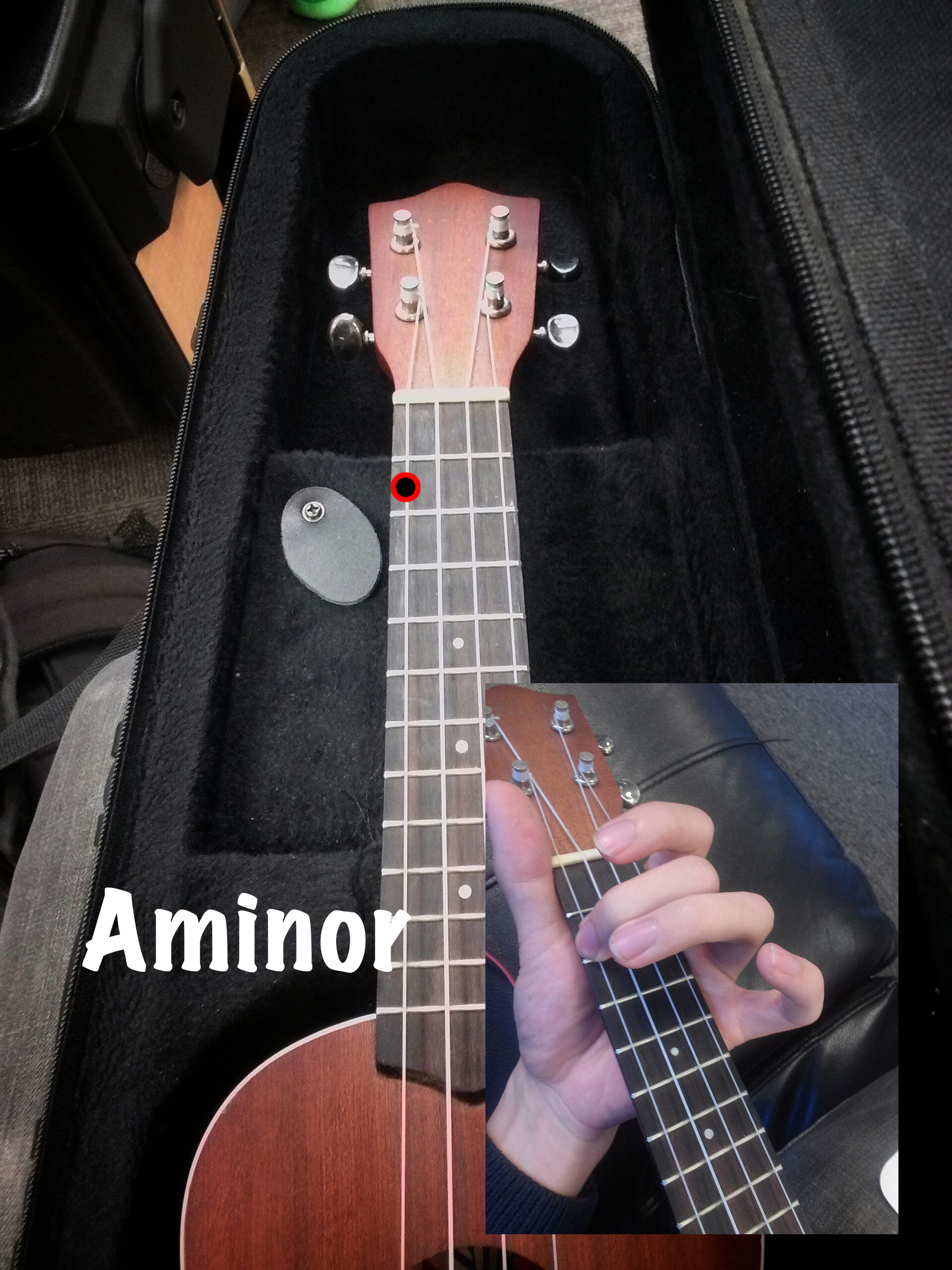
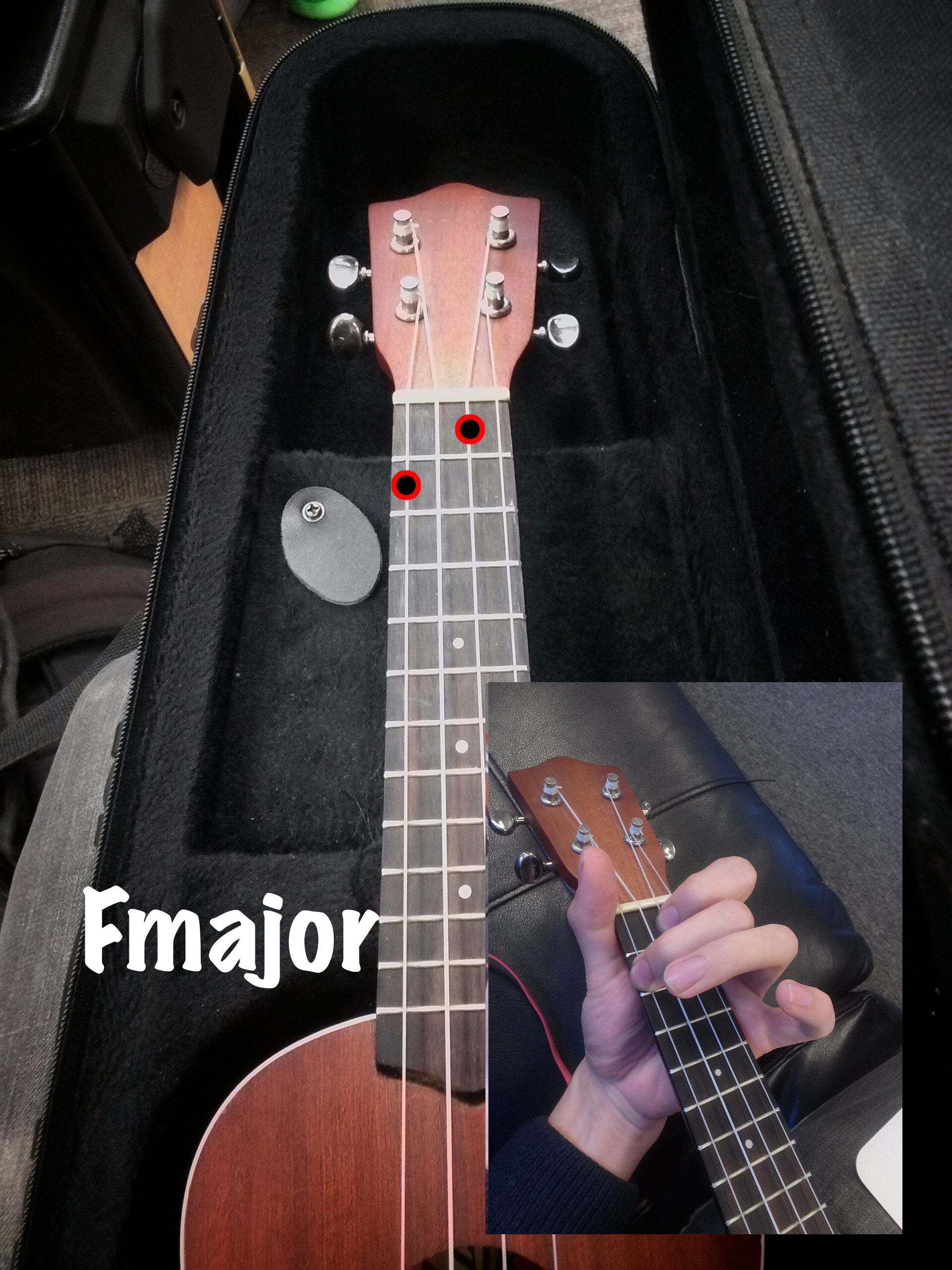
Chords are group of notes played at the same time. In this song, we will be playing four chords. C major, E minor, A minor and F major. In order to play these chords, you need to press down on the specific string in specific frets. See the diagram below.
C Major
You can play C major by holding down the A string on the third fret.
E Minor
You can play E minor by holding down the A string on the second fret, the E string on the third fret and the C string on the fourth fret.
A Minor
You can play A minor by holding down the G string on the second fret.
F Major
You can play C major by holding down the G string on the second fret and the E string on the first fret.
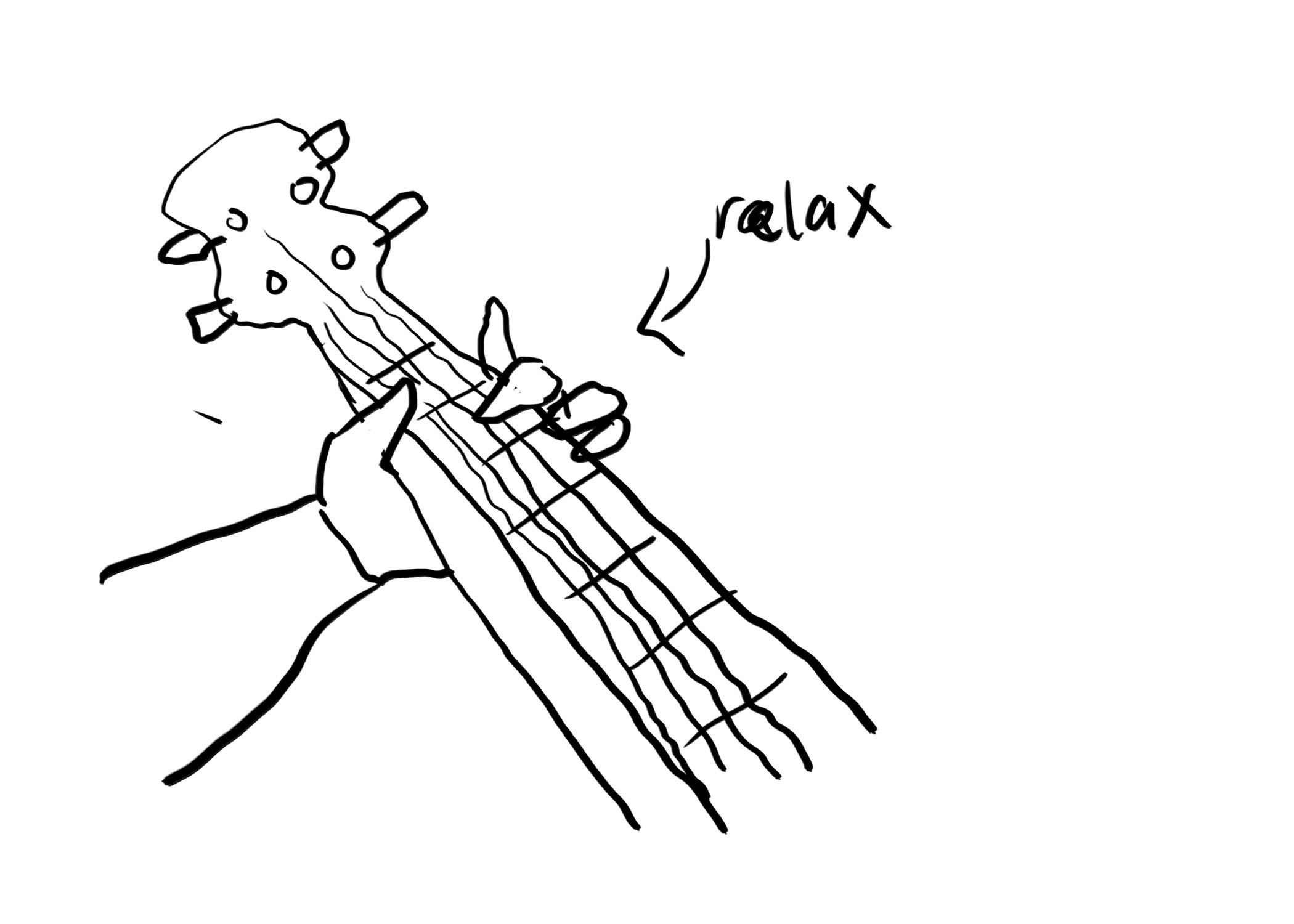
Make sure you only press down as hard as you need to make a clear sound. Test this by holding down a chord, then picking every string. If every string rings true, you know you’re pressing down hard enough. test this by pressing down less and picking the strings again. Find the balance of least pressure, with clear notes.
Strumming
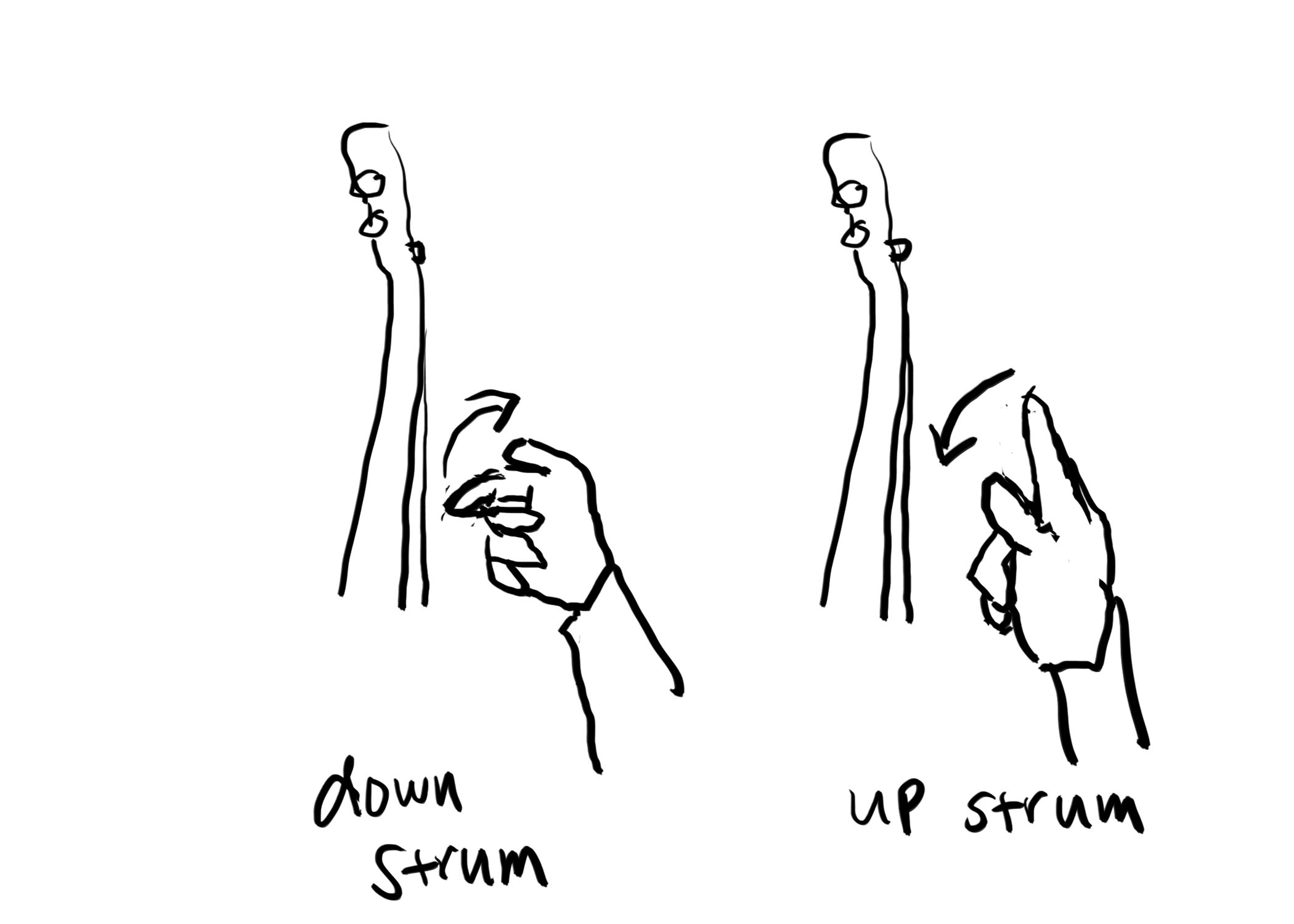
Now it’s time to learn how to strum you’re ukulele. you’re going to use your right hand for this. When you’re strumming you’re brushing up and down on the strings to play the chords in an even way.
For strumming you are always going to use the index finger of your right hand. Upstrumming means brushing your fingers on the string from the A string to the G string. Upstrumming is with the inside (palms side) of your index finger.
Downstrumming mean brushing you index finger from the G string to the A string. You use the outside (back of your hand side) of your index finger to down strum.
Imagine you stroking a cat, not too much pressure, but enough to make some noise. You want to strum the ukulele near the hole.
Strumming Pattern
You’re almost there! you know the chords you need to play, C major, E minor, A minor and F major. You are going to play the chords in this strumming pattern.
DDUUUDU
D = Downstrum
U = Upstrum
It will sound like this:
You’re Done!
Celebrate, work on you’re transitions. And remember, have fun!
Being busy does not mean you have a lot of work. Being busy means that your mind is not at peace.
The implications of this are enormous. People can be busy even if they don’t have a lot of work. And it is conceivable to have mountains and mountains of work and yet still not be “busy”. It all has to do with how much you are in touch with your inner peace. What I mean by that is, the amount of calmness and peace that you feel when you go about your work, talk to friends and colleagues.
The feeling of busy-ness may be caused by being overwhelmed by a heavy workload, but it could just as easily be caused simply by a chronic distracted-ness which is common in our age of technology.
The best part I like about this new revelation? I often feel like there is a huge discrepancy between what I want to do and what I actually feel like I’m getting done. I feel very very busy.
I used to try to become more productive, in other words, do more work more effectively. Perhaps instead I should be looking to resting and meditating more effectively. Instead of trying to solve my feeling of busy-ness through celebrating the drive to do projects I love, and feeling a sense of calm and patience and optimism that everything I want to do will get done.